
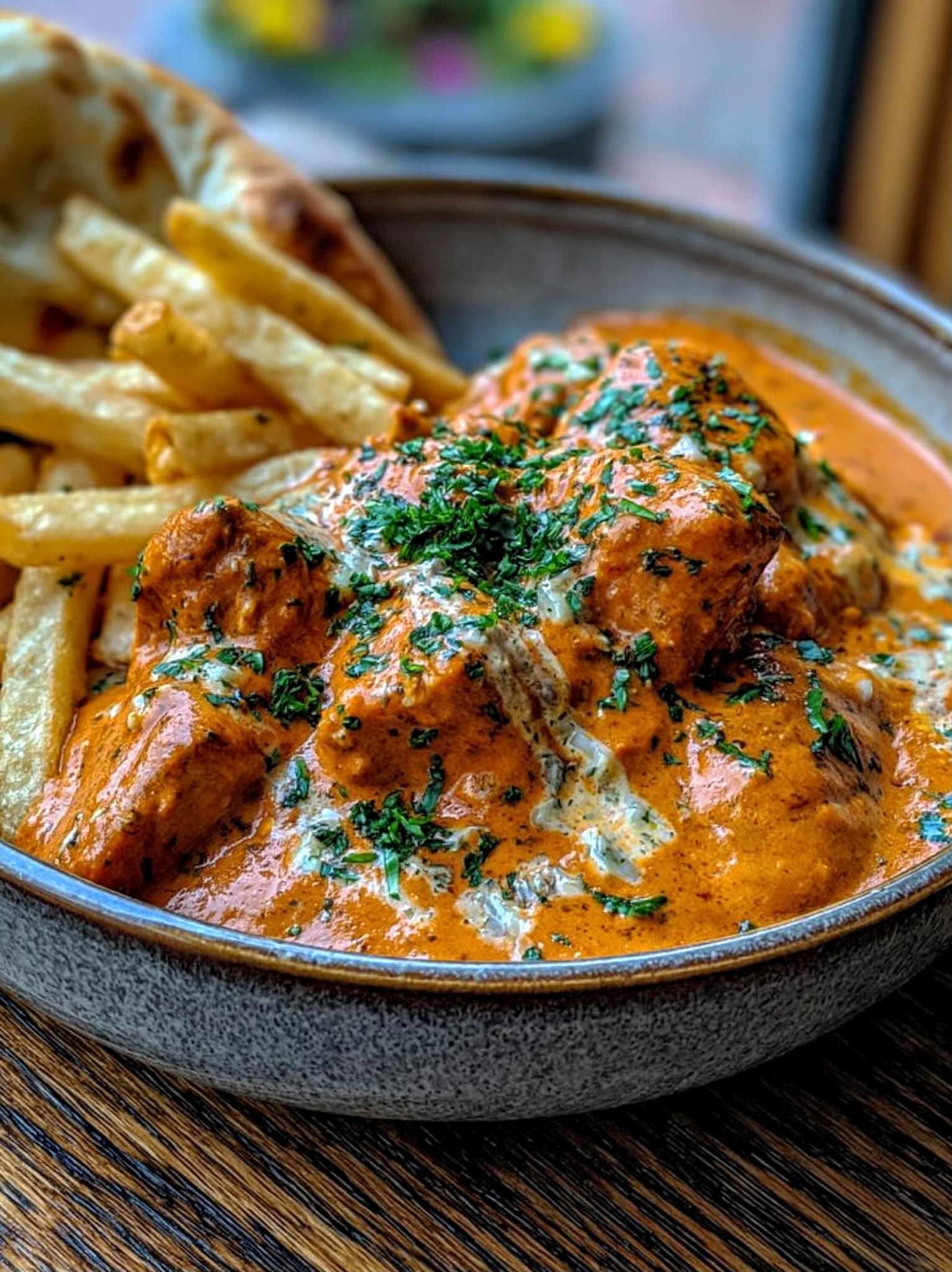
Creamy Indian Butter Chicken Recipe
Why Creamy Indian Butter Chicken Is Loved Worldwide
Creamy Indian butter chicken is one of those dishes that instantly wins people over. After all, it combines juicy chicken with a silky, buttery tomato sauce that feels rich without being overly heavy. At the same time, the spice level is usually mild, so even people who don’t enjoy very spicy food can still love it.
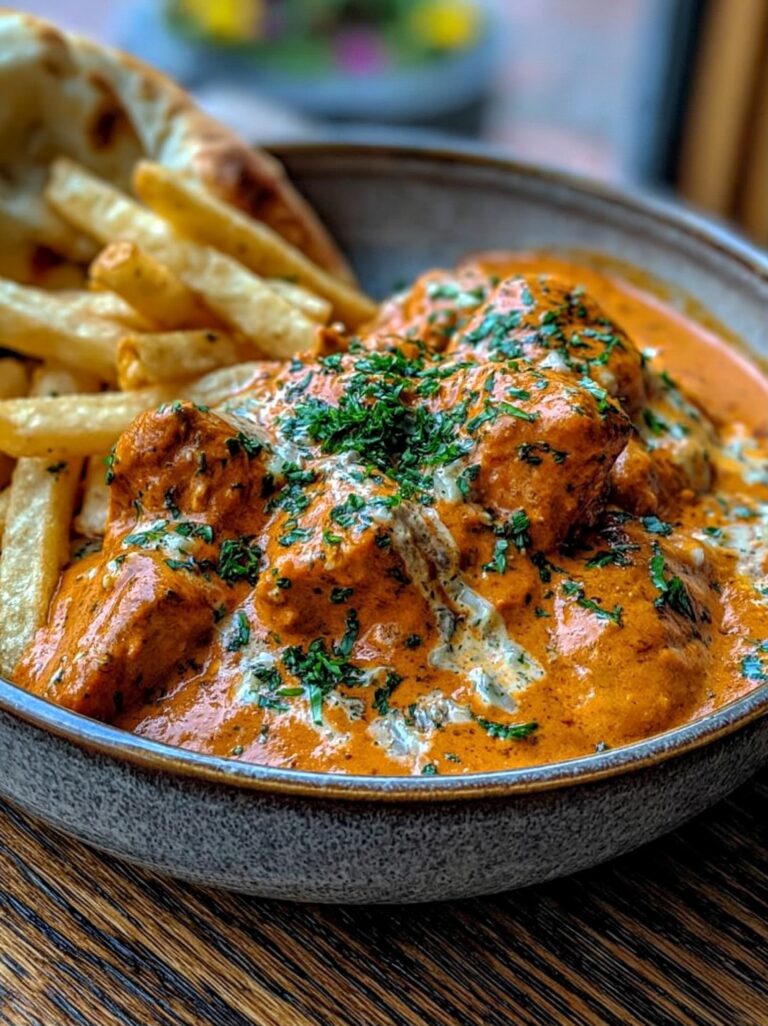
Creamy Indian Butter Chicken – Easy and Tasty
Ingredients
For the Butter Chicken:
600 g boneless chicken thighs, cut into bite-sized pieces
2 tablespoons butter
1 tablespoon vegetable oil
1 medium onion, finely chopped
3 cloves garlic, minced
1 tablespoon fresh ginger, grated
1 cup tomato puree
1/2 cup heavy cream
1 teaspoon paprika
1 teaspoon garam masala
1/2 teaspoon turmeric
1 teaspoon salt
1/2 teaspoon black pepper
1 teaspoon sugar
2 tablespoons fresh cilantro, chopped
For the Garlic Sauce:
1/2 cup mayonnaise
2 cloves garlic, finely minced
1 tablespoon lemon juice
1 tablespoon yogurt
Pinch of salt
For the Crispy Fries:
3 large potatoes, peeled and cut into fries
Vegetable oil for frying
Salt to taste
Instructions
- Author: mia recipe
Another reason this Indian chicken curry became so popular is its comforting flavor. The balance between cream, tomatoes, butter, and aromatic spices creates a smooth taste that feels satisfying in every bite. In fact, many people first explore Indian cuisine through butter chicken because it’s approachable and flavorful.
Besides that, this dish pairs beautifully with several side dishes. Warm naan bread soaks up the creamy curry perfectly, while fluffy basmati rice balances the rich sauce. Consequently, it’s often served during family dinners, celebrations, and restaurant meals around the world.
What truly makes this dish stand out, though, is its texture. Unlike thinner curries, restaurant-style butter chicken has a velvety gravy that coats the chicken beautifully. Because of this, every spoonful tastes indulgent and full of flavor.
Interestingly, butter chicken also works for different occasions. It’s comforting enough for a cozy weeknight meal, yet elegant enough for dinner parties. Furthermore, the leftovers taste even better the next day because the spices continue developing overnight.
Many home cooks also love this recipe because it’s flexible. You can make it smoky, extra creamy, mildly sweet, or slightly spicy depending on your preference. Therefore, it’s easy to customize without losing the authentic feel of the dish.
If you’d like to learn more about the fascinating roots of Indian cooking spices, this helpful resource from Spiceography explains many traditional spice blends used in classic curries.
What Makes Butter Chicken Different from Chicken Tikka Masala
People often confuse butter chicken with chicken tikka masala. Although both dishes contain chicken in a tomato-based sauce, they actually taste quite different.
The biggest difference lies in the texture and richness of the gravy. Creamy butter chicken has a smoother, silkier sauce made with butter and cream. On the other hand, chicken tikka masala usually tastes bolder, tangier, and slightly spicier.
Another distinction comes from sweetness. Traditional murgh makhani often includes a small touch of sweetness that balances the tomatoes and spices. Meanwhile, tikka masala tends to focus more on smoky and robust flavors.
The cooking method also changes the final taste. Butter chicken commonly uses marinated tandoori-style chicken that simmers gently in a buttery tomato sauce. Because of that, the meat absorbs rich flavors while staying juicy and tender.
Texture matters too. In many restaurant versions, butter chicken sauce is blended until incredibly smooth. Consequently, it develops that luxurious consistency people associate with authentic North Indian curry.
Even though the dishes share ingredients like garam masala, ginger garlic paste, and tomatoes, the final flavor profile feels very different. Butter chicken is softer, creamier, and more mellow, whereas tikka masala is often more intense and spice-forward.
That’s exactly why butter chicken appeals to such a wide audience. It delivers bold Indian flavors without overwhelming the palate.
The Origins of Authentic Butter Chicken (Murgh Makhani)
The story behind authentic butter chicken is just as rich as the curry itself. This famous dish originated in Delhi, India, during the mid-20th century. Specifically, it was created by chefs at the legendary Moti Mahal restaurant.
According to popular food history, the cooks wanted to avoid wasting leftover tandoori chicken. Therefore, they simmered the roasted chicken pieces in a buttery tomato gravy enriched with cream and aromatic spices. Surprisingly, that simple idea eventually became one of India’s most famous dishes.
Traditional murgh makhani reflects the flavors of North Indian cuisine. Rich dairy ingredients like butter, cream, and yogurt are commonly used in Punjabi cooking, which explains the luxurious texture of the curry.
Over time, the dish spread far beyond India. As Indian restaurants opened across Europe, North America, and the Middle East, butter chicken quickly became a customer favorite. Because the curry is mild yet flavorful, it appealed to people trying Indian food for the first time.
Today, many versions exist around the world. Some recipes use cashews for extra creaminess, while others add smoky charcoal flavor for a more authentic restaurant touch. Nevertheless, the heart of the dish remains the same — tender chicken in a rich buttery tomato sauce.
If you enjoy learning about the cultural history of iconic foods, this article from National Geographic India explores how Indian dishes evolved over time and became globally loved.
Another important detail about butter chicken is the marinade. Yogurt-based marinades not only add flavor but also help tenderize the chicken naturally. This guide from Healthline explains why yogurt marinades work so well in cooking.
Ingredients You Need for Creamy Indian Butter Chicken
The secret behind truly delicious creamy Indian butter chicken starts with the ingredients. Although the recipe looks simple at first glance, every ingredient plays an important role in building flavor, texture, and aroma. Moreover, using the right balance of spices, dairy, and tomatoes helps create that smooth restaurant-style butter chicken people crave.
Interestingly, authentic murgh makhani doesn’t rely on extreme heat or too many spices. Instead, it focuses on harmony. The creamy sauce, warm Indian spices, and juicy chicken all work together beautifully.
Best Chicken Cuts to Use
Choosing the right chicken makes a huge difference in texture. While both chicken thighs and chicken breast can work, boneless chicken thighs usually give the best results.
Chicken thighs stay juicy because they contain slightly more fat. As a result, they remain tender even after simmering in the buttery tomato gravy. Chicken breast, meanwhile, cooks faster but can dry out if overcooked.
For the most flavorful Indian chicken curry, many chefs prefer skinless boneless thighs. They absorb marinades well, and furthermore, they develop a richer taste during cooking.
If you want a lighter option, chicken breast still works nicely. However, it’s important not to overcook it. Otherwise, the meat may turn chewy instead of tender.
Some traditional recipes even use grilled tandoori chicken pieces for extra smokiness. Because of that, homemade butter chicken often tastes even better when the chicken gets a slight char before entering the sauce.
Essential Marinade Ingredients
A good marinade transforms ordinary chicken into flavorful, tender meat packed with authentic Indian taste. In fact, marination is one of the most important steps in making homemade butter chicken.
The base of the marinade is usually plain yogurt. Yogurt gently tenderizes the chicken while also helping the spices stick to the meat. Consequently, every bite becomes juicy and flavorful.
The marinade commonly includes:
- Yogurt
- Lemon juice
- Ginger garlic paste
- Kashmiri chili powder
- Turmeric
- Garam masala
- Salt
Kashmiri chili powder deserves special attention because it adds vibrant color without making the curry too spicy. Therefore, it creates that beautiful reddish-orange appearance found in many restaurant versions.
Meanwhile, ginger garlic paste builds deep savory flavor. Without it, the curry can taste flat. Turmeric adds warmth and earthy notes, while garam masala contributes the signature aroma associated with North Indian curry dishes.
For the best results, marinate the chicken for at least 4 hours. Overnight marination, however, creates even more tender and flavorful meat.
If you’re curious about how traditional spices shape Indian dishes, this helpful guide from Spiceography explains the flavor profiles of many classic curry spices.
Ingredients for the Creamy Butter Chicken Sauce
The sauce is the heart of creamy butter chicken. Rich, smooth, and buttery, it transforms simple chicken into an unforgettable comfort food dish.
The main sauce ingredients usually include:
- Butter
- Tomatoes or tomato puree
- Onion
- Heavy cream
- Cashews
- Ginger garlic paste
- Garam masala
- Coriander powder
- Cumin
- Kasuri methi
Butter creates richness and gives the curry its famous luxurious taste. At the same time, tomatoes add brightness and gentle acidity that balances the cream beautifully.
Many authentic recipes also include soaked cashews. Once blended, cashews create a naturally silky texture without making the sauce overly heavy. Consequently, the curry becomes velvety and smooth.
Heavy cream softens the spices while adding richness. However, balance matters. Too much cream can overpower the tomato flavor and make the dish feel greasy instead of elegant.
Onions help create body in the gravy. They’re usually sautéed until soft and lightly golden before blending. This technique produces a smoother curry texture.
Another essential ingredient is kasuri methi, or dried fenugreek leaves. Although only a small amount is needed, it gives butter chicken its signature restaurant aroma. In fact, many people instantly recognize the smell of butter chicken because of kasuri methi.
To create deeper flavor, some cooks also use ghee instead of regular cooking oil. Ghee adds a nutty richness that works wonderfully in Indian curries.
Essential Indian Spices Explained
Indian cooking may seem spice-heavy at first, yet butter chicken actually uses spices in a very balanced way. Instead of overwhelming heat, the spices build warmth, depth, and aroma.
Here are the key spices commonly used in authentic butter chicken:
Garam Masala
This spice blend brings warmth and complexity. It usually contains cardamom, cinnamon, cloves, cumin, and black pepper.
Coriander Powder
Coriander adds citrusy, earthy notes that brighten the curry.
Cumin
Cumin creates a smoky, warm base flavor that’s essential in many Indian dishes.
Kashmiri Chili Powder
Unlike very hot chili powders, Kashmiri chili mainly adds color and mild warmth.
Turmeric
Turmeric contributes earthiness and a golden tone to the marinade.
Kasuri Methi
Dried fenugreek leaves provide a slightly sweet, smoky aroma that defines restaurant-style butter chicken.
Because every spice has a purpose, balancing them carefully is extremely important. Too much garam masala, for example, can overpower the creamy sauce.
If you’re new to Indian cooking, understanding spices can feel intimidating at first. Thankfully, resources like Spiceography make learning much easier.
Optional Ingredients for Restaurant-Style Flavor
Although classic butter chicken already tastes incredible, a few optional ingredients can make it taste even more like restaurant curry.
Charcoal Smoke
Some chefs place hot charcoal in a small bowl inside the curry, then drizzle oil over it before covering the pot briefly. This technique adds smoky tandoori-style flavor.
Honey or Sugar
A tiny amount balances acidic tomatoes beautifully. However, too much sweetness can ruin the curry’s balance.
Ghee
Ghee creates deeper richness and enhances traditional Indian flavors.
Cashew Cream
Blended cashew cream adds extra silkiness while keeping the sauce smooth and luxurious.
Fresh Cream Drizzle
Many restaurants finish the dish with a swirl of cream on top for presentation and richness.
Interestingly, the best butter chicken recipes focus on balance rather than heaviness. The goal is a smooth, flavorful curry that feels rich but still light enough to enjoy comfortably.
That’s exactly why creamy Indian butter chicken remains one of the world’s most beloved comfort foods.